|
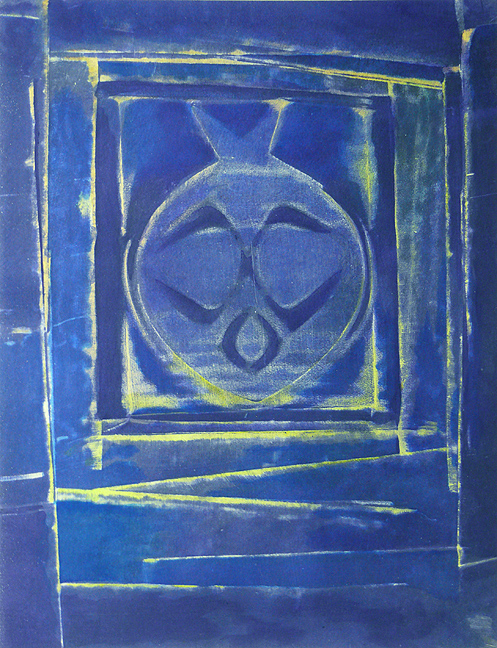
Original pochoir. An impression from "XXe Siècle" (XXth Century) art review, printed in March 1958, N10. In very good condition, unframed.
Sheet size: 12 7/16" x 9 3/4"
Ernst was born in Brühl, near Cologne. A prolific painter, sculptor, graphic artist, and poet, Ernst is considered to be one of the primary pioneers of the Dada movement and Surrealism, who helped inspire the development of Abstract expressionism. In 1909, he enrolled in the University at Bonn to study philosophy but soon abandoned the courses. He began painting that year, but never completed any formal artistic training. During World War I he served in the German army, which was a momentous interruption in his career as an artist. He stated in his autobiography, "Max Ernst died the 1st of August, 1914." After the war, filled with new ideas, Ernst, Jean Arp and Alfred Grünwald formed the Cologne, Germany Dada group. In 1922, he joined fellow Dadaists André Breton, Gala, Tristan Tzara, and Paul Éluard at the artistic community of Montparnasse. He collaborated with Joan Miró on designs for Sergei Diaghilev.
Ernst developed a fascination with birds that was prevalent in his work. His alter ego in paintings, which he called Loplop, was a bird. He suggested this alter-ego was an extension of himself stemming from an early confusion of birds and humans. In 1938, the American heiress and artistic patron Peggy Guggenheim acquired a number of Max Ernst's works, which she displayed in her new museum in London. Ernst and Peggy Guggenheim were later married to one another from 1942 to 1946. Ernst lived in California and Arizona until 1953 and died on 1 April 1976, in Paris. |